



임상사례
5 year experiences
The first type of mini-implant was developed in 2001 based on the studies using finite element model analyses and animal studies. From then, many researches and clinical trials were performed to increase the stability and the clinical efficiency. We have experienced some problems with mini-implants and we have solved them successfully.
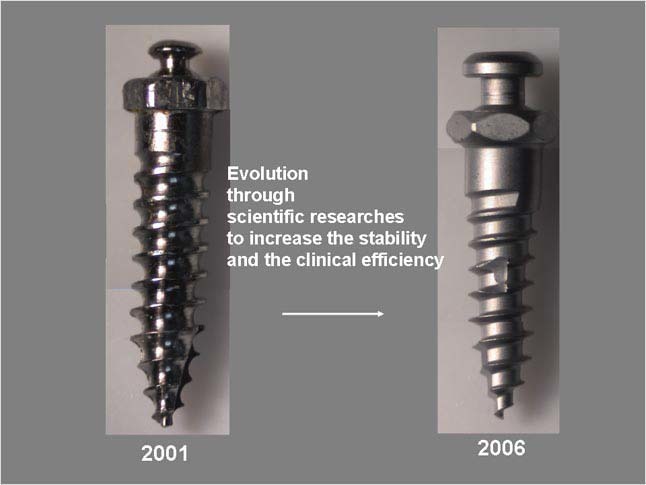
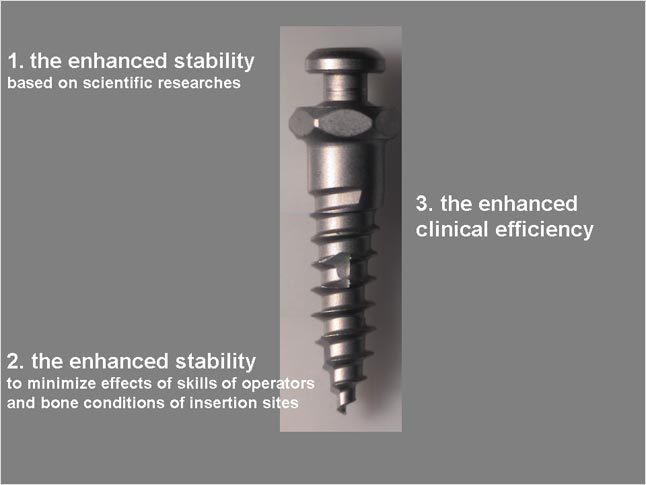
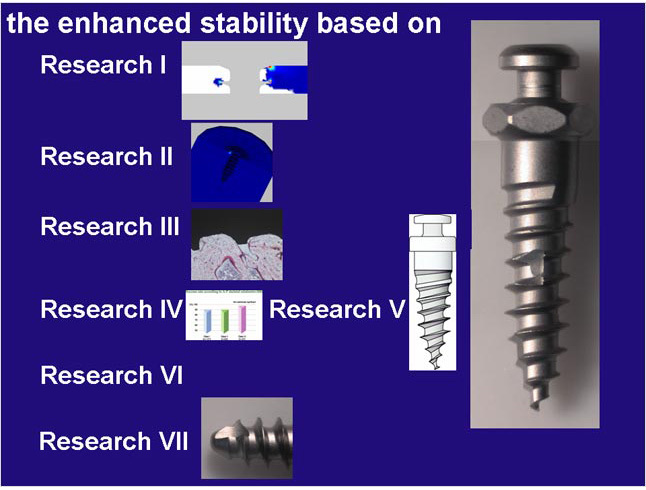
Designs based on scientific researches
Research I
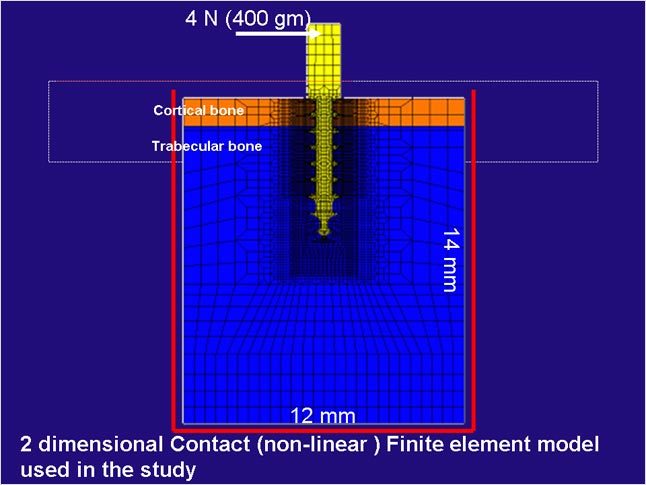
Contact non-linear finite element model analyses of immediately-loaded orthodontic mini implant using two-dimensional models
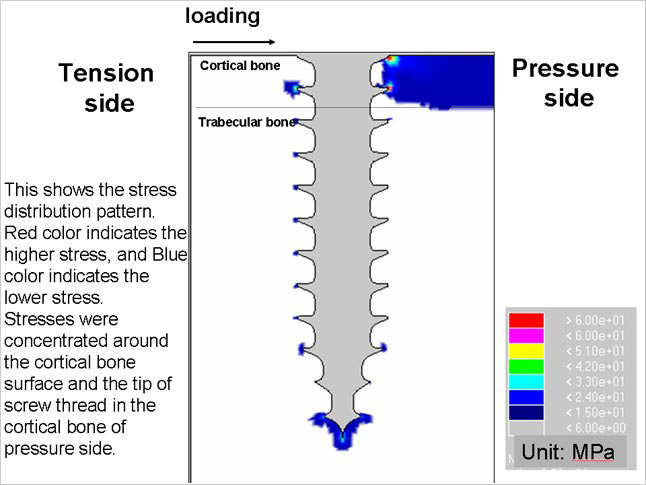
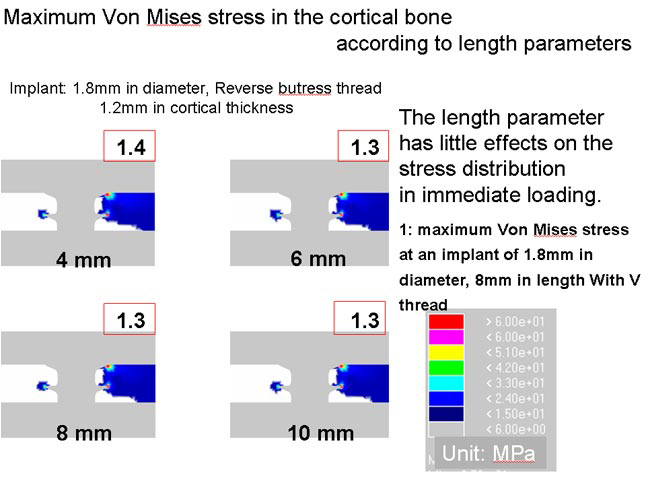
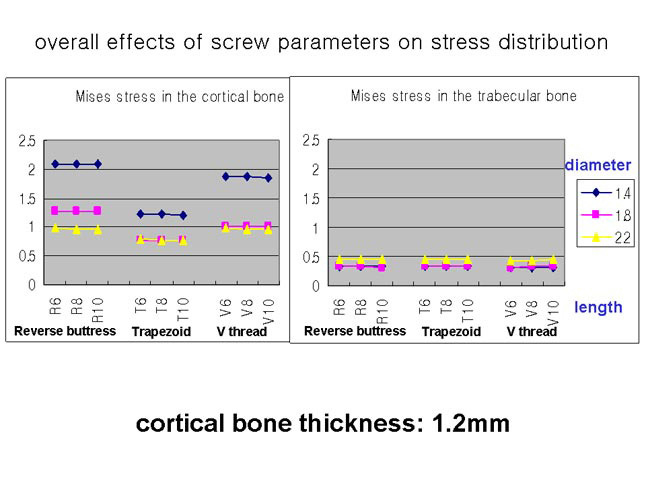
To investigate the screw parameters affecting early stability, contact non-linear analyses using two-dimensional models were performed. Contact non-linear analyses are based on the assumption that the bone-implant interface is not fixed in order to simulate the interface shortly after implant placement.
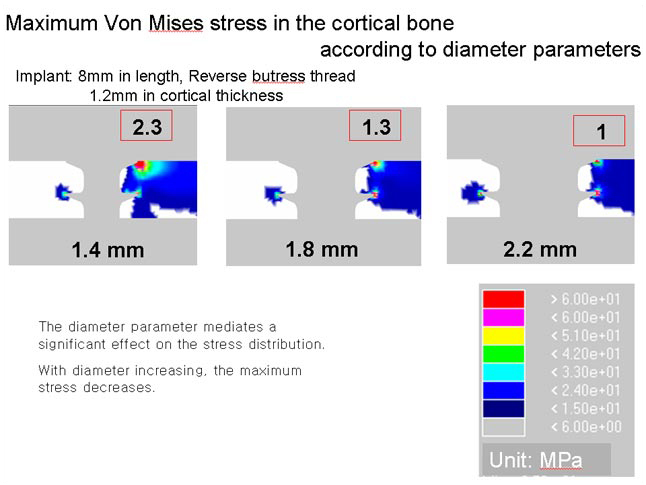
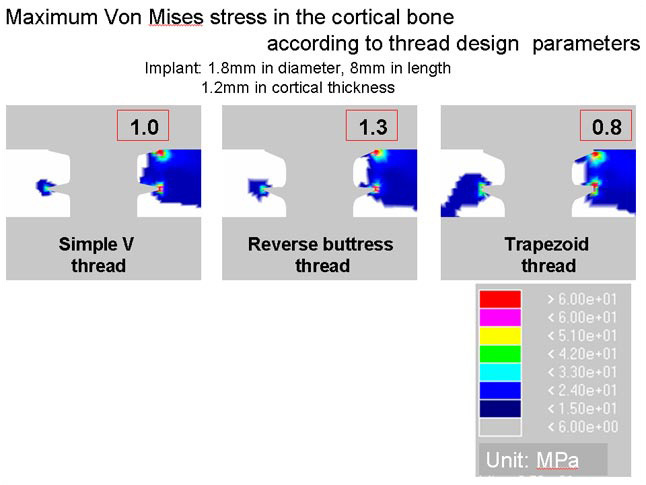
The length parameter has little effect on the distribution of stress, but the thread design and the diameter parameter mediate a significant effect on the stress distribution.
In conclusion, the thread design and the diameter parameter in the cortical bone are important for initial stability.
Research II
Contact non-linear finite element model analyses of immediately-loaded orthodontic mini implant using three-dimensional models
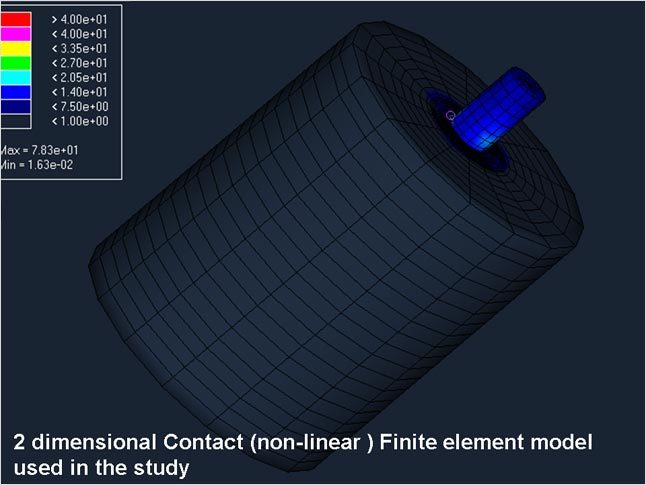
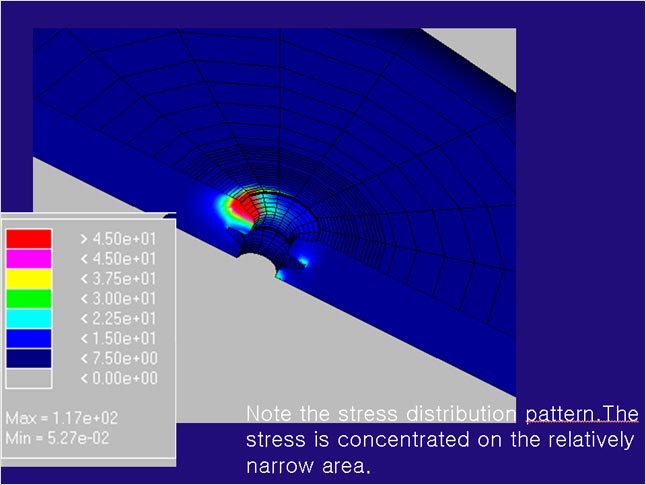
In order to confirm the study using two-dimensional models and study the physiological threshold, three-dimensional finite element model analyses were performed. The stress is concentrated on the relatively narrow area and the effects of screw parameters on the stress distribution are almost same as those of two dimensional analyses.
In conclusion, the thread design and the diameter parameter in the cortical bone are important for initial stability.
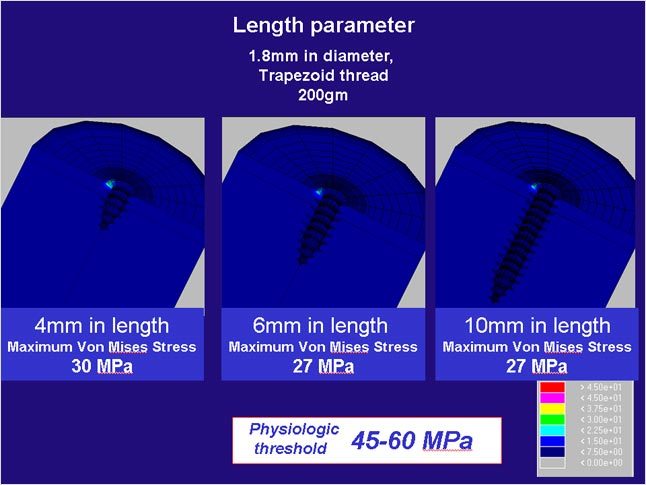
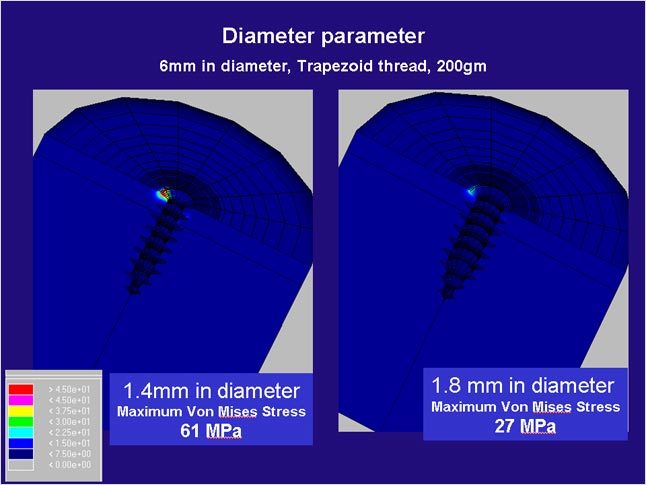
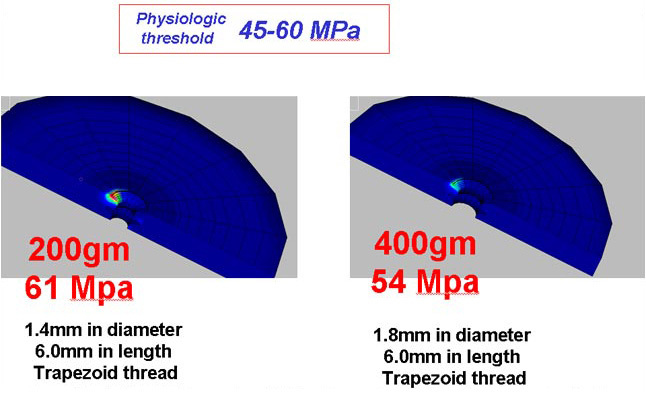
According to three-dimensional finite element model analyses, an implant 1.4mm in diameter placed in cortical bone of 1.2mm thickness can tolerate 150 grams of orthodontic forces while an implant 1.8mm in diameter can tolerate 350 grams of orthodontic forces. (Physiologic threshold of cortical hone 45-60MPA)
Research III
Pilot Studies of ORLUS® mini-implants using rabbit femurs
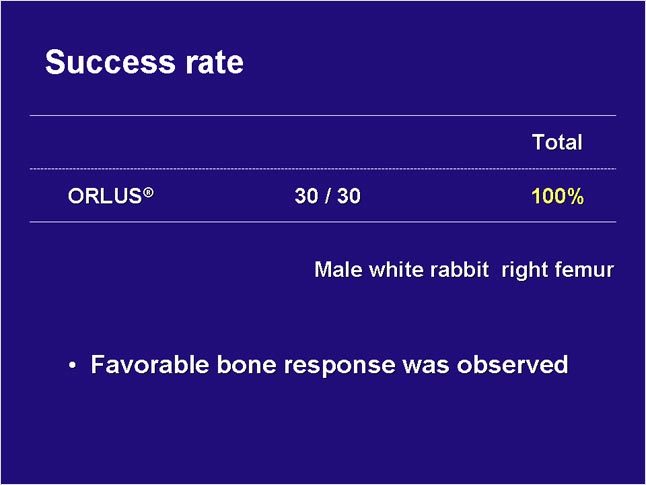
Orlus mini-implants (n=30, 1.8mm In diameter and 7mm in length) were placed in the femurs of 3- to 6-month-old male rabbits to investigate tissue reactions to loaded mini-implants.
After an observation period of 1 week to 6 months, all mini-implants were stable at sacrifice. No unfavorable tissue responses were observed under histological examination. Direct contacts with living bone tissue
were observed at the interface.
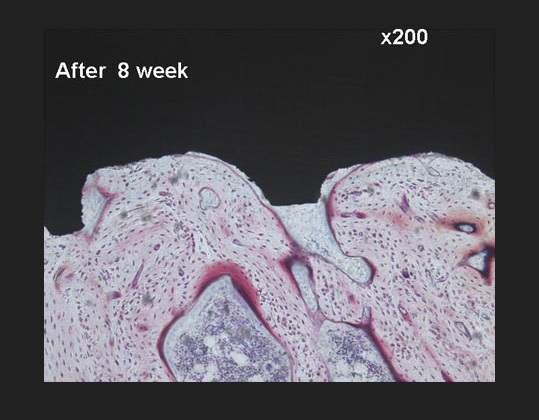
Direct contacts with living bone tissue were observed at the Interface.
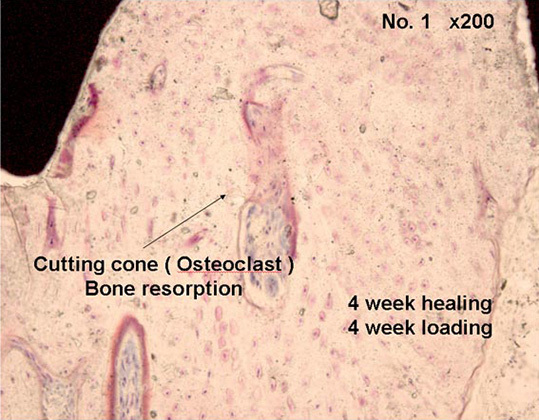
Normal bone remodeling process was also observed.
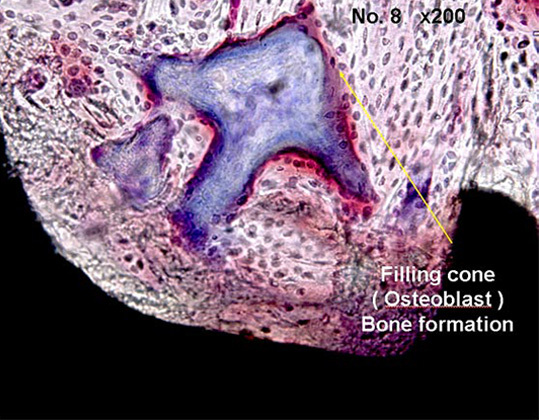
Bone formation by osteoblasts was observed.
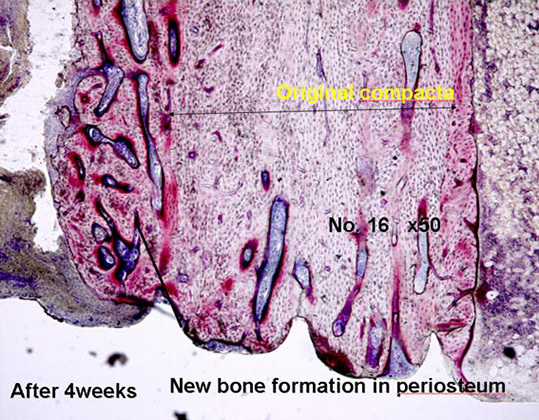
And New bone formation in the periosteum was observed.
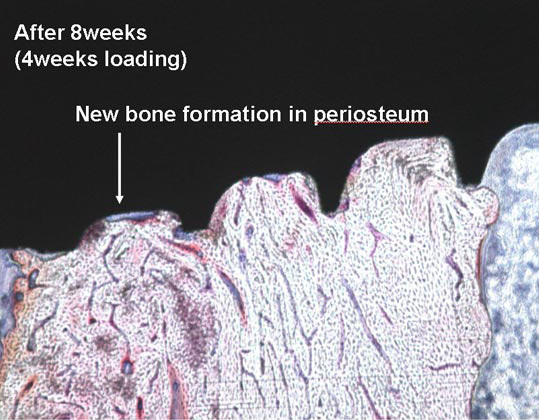
New bone formed in periosteum contacted directly with an implant
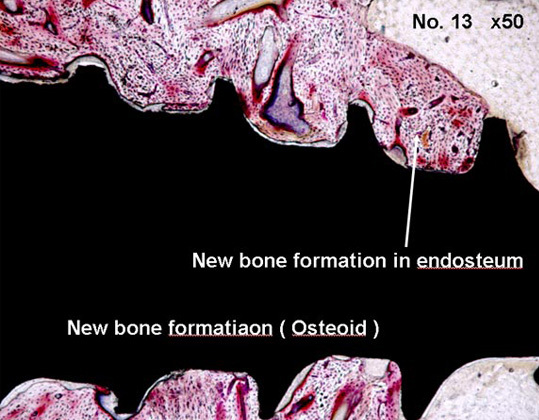
New bone formed in endosteum also contacted directly with an implant.
Research IV
Factors associated with the stability of ORLUS mini-implants in the posterior alveolar area
The success rate of ORLUS was investigated by a blind test.
ORLUS impplants(Mx: 2.2mm in diameter and 8mm in length, Mn: 2.2mm in diameter and 7mm in length) were placed without pre-drilling by one operator. After 3-4weeks of healing period, 200-300gms of force were applied by elastic chains.
And another investigator examined the success rate.
The observation period was over 4 months.
ORLUS implant showed a 95% success rate.
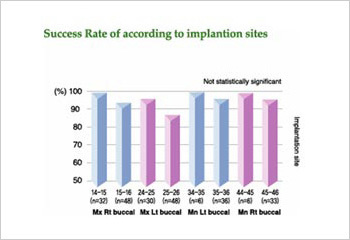
Success rates according to insertion sites. Although there was no statistical significance, the right side shows a higher success rate.
This seemed to be due to differences in accessibility. The operator was right-handed, so the operator had better accessibility on the right side. Therefore, the right side showed a relatively high success rate. This indicates that even a skillful operator can be influenced by accessibility. In other words, standardization cannot be overemphasized.
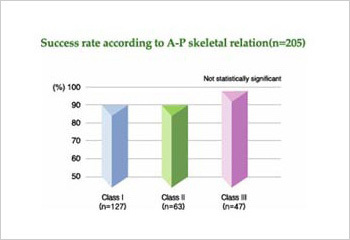
Success rates according to the A-P skeletal relationship. There was no statistical significance.
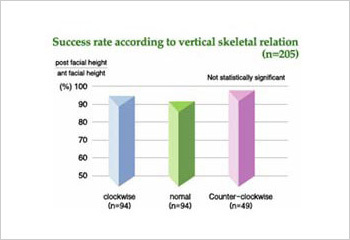
Success rates according to the vertical skeletal relationship. There was no statistical significance
Research V
Comparative studies on the stability of Mini-screws
Another research was performed to investigate the success rate in the department of orthodontics, Yonsei university, dental hospital. ORLUS® mini-implants showed higher success rate than drill-free type bone screws(Martin®).
| Maxilla | Mandible | Midpalate | Total | |
|---|---|---|---|---|
| Martin® |
52/205 (25.4%) | 22/167 (13.2%) | 7/101 (6.9%) | 81/473 (17.1%) |
| Orlus® | 21/231 (9.1%) | 16/165 (9.7%) | 4/103 (3.9%) | 41/499 (8.2%) |
Research VI
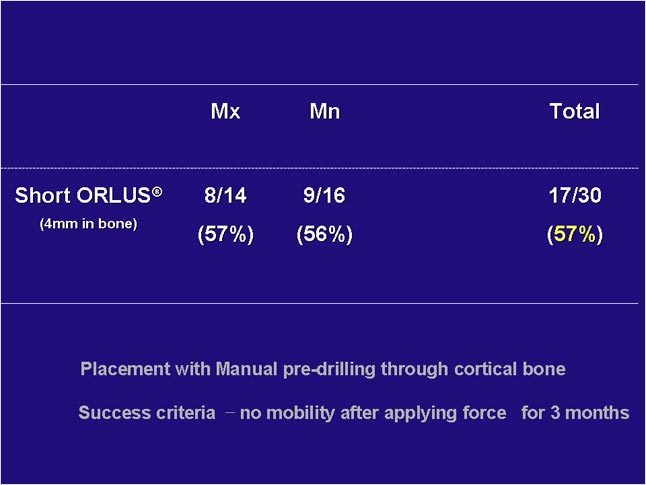
Pilot studies on the stability of short ORLUS mini-implants
Based on the results of the finite element model analysis, a pilot study was performed using mini-implants of 2.2mm in diameter and 4mm long in bone. The implants were placed after predrilling through cortical bone.
Though the sample size was small, the results showed relatively low success rates, which may have been due to the insertion procedure. That is, the screw should bite bone and be engaged in bone for the final seating, but 4mm does not seem to be enough for a stable insertion procedure.
Research VII
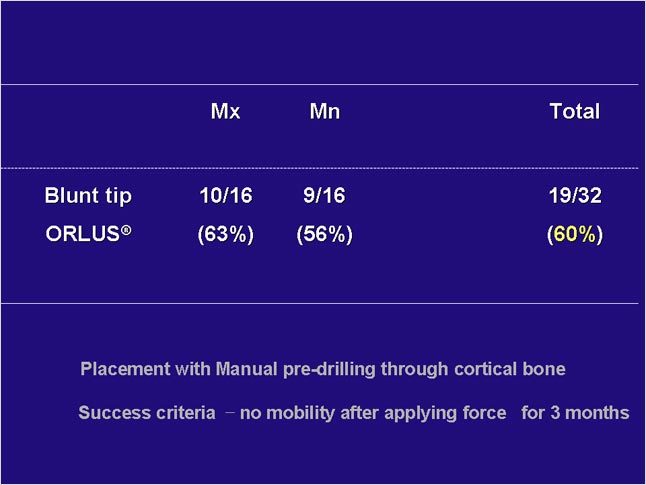
Pilot studies on the stability of mini-implants of blunt tips
Based on the finite element model analysis and manual pre-drill system, mini-implants with a blunt tip was developed to eliminate root injuries.
The mini-implant with a blunt tip(2.2mm in diameter and 6mm long in bone) was placed after pre-drilling through cortical bone.
The pilot study showed very disappointed results, which may be caused by the tip design. That is, the tip disturbs final seating of implants, and it compromise primary stability.
Outstanding the stability
the enhanced stability based on designs
- To minimize the influence of the skill of the operator over the success rate
(Not technique-dependent) - Minimize the influence of bone conditions over the success rate
(Not site-dependent)
Not technique-dependent
the enhanced stability based on designs
- To minimize the influence of the skill of the operator over the success rate
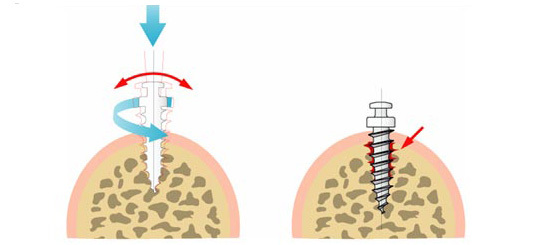
The skill of the operator has influences on the success rate. 'Wobbling (eccentric insertion, shaking of insertion axis) "during the insertion procedure may compromise the primary stability. Cortical bone is very hard, therefore, excessive vertical force can easily be delivered during the drilling procedure. If the vertical force is delivered during insertion on cortical bone, lateral force is produced and the axis is easily shaken.
(a) During the insertion procedure, if the axis is shaken, the cortical bone needed for support is injured so that support is provided only by trabecular bone (b), and the strength of trabecular bone is weaker than that of cortical bone. Therefore, sufficient early fixation cannot be obtained. In other words, initial mechanical stabilization obtained from the cortical bone may differ according to the skill of operators.
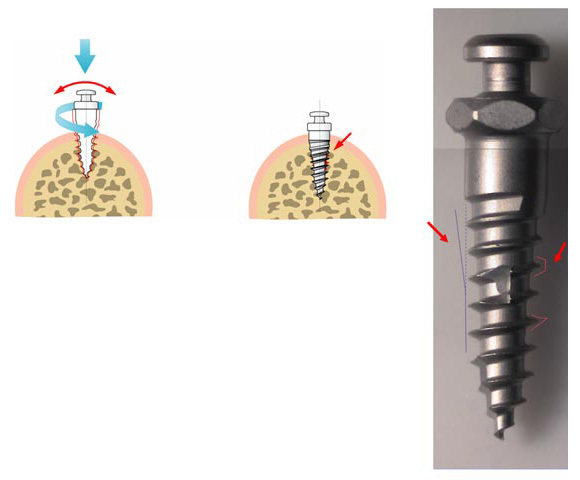
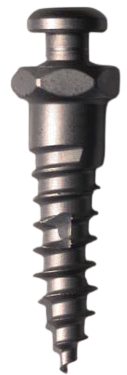
ORLUS mini-implants has a tapered core and trapezoid threads. And they can Offset inevitable cortical damages during insertion.
Not site-dependent
the enhanced stability based on designs 2. Minimize the influence of bone conditions over the success rate
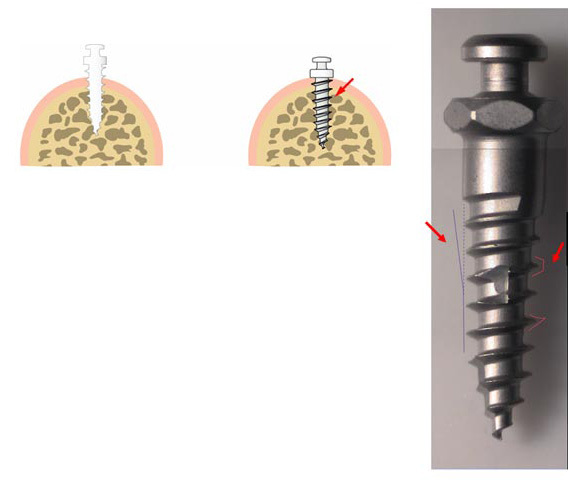
Bone condition of the implant site also has influences on the success rate.
The thicker the cortical bone, the more advantageous for primary stability.
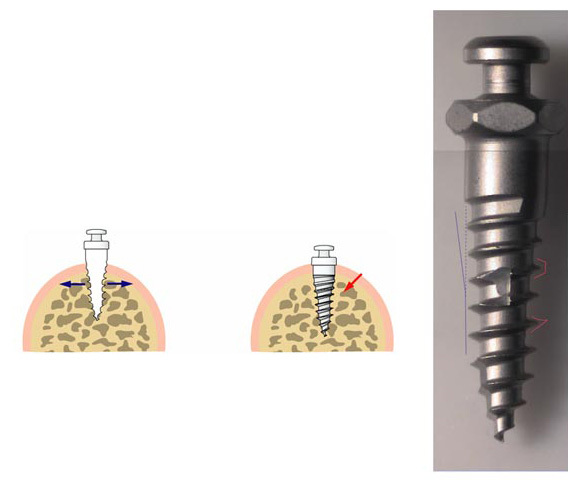
The tapered core of the cervical half has a bone condensing effect that improves the bone quality.
Therefore, the unique design of ORLUS can Minimize the influence of bone conditions over the success rate
- 상호 : (주)오솔루션
- 대표자 : 김정문
- 주소 : 서울 강동구 양재대로 1371 (성내동) 207호
- TEL : 02-483-1212
- FAX : 02-478-0735
- 사업자 등록번호 : 212-81-63456
- EMAIL : orlus@ortholution.com
- Copyright(c) (주)오솔루션. All Rights Reserved.

