



ORTHOLUTION
Next Generation of Orthodontic mini-implant
-
Infection and abscess
- Loosening of the orthodontic implant
- Fracture of the orthodontic implant
- Treatment of the fractured tip
- Injury of periodontal tissue
- Infection and abscess
- Damage of neighboring soft tissue
- Orthodontic implant covered with soft tissue
- Pain during implantation
- Pain during mastication
- Implantation in inappropriate area
Infection and abscess
Infection and abscess
Once an abscess is found, an incision should be made and drainage should be carried out; antibiotics should also be prescribed. At this time, if the patient does not feel any discomfort or painful feelings, does not show any general signs indicating infection, and the neighboring periodontal tissues are sound, the orthodontic implant does not have to be removed (figure 8, 9). However, if the neighboring periodontal tissues are disrupted with a probing depth increasing, the orthodontic implant should be removed immediately (figure 10). In all cases, hygienic care of the surrounding tissue must be maintained.
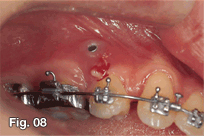
Fig. 8 If an abscess is formed in the surrounding tissue of the orthodontic implant, periodontal examinations should be performed using a periodontal probe. All neighboring teeth were sound, and the abscess was limited to the gingival tissue. Incision and drainage were carried out, and general antibiotics were prescribed. The orthodontic implant was not removed.
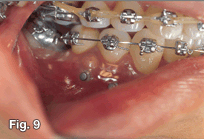
Fig. 9 An abscess formed and pus was discharged through the neighboring tissue. Because the probing depth was within normal limits, the abscess was resolved through I&D (incision and drainage) and general antibiotics. The orthodontic implant was not removed.
Fig. 10 An abscess was formed and discharged in the surrounding areas of the neighboring tooth (a, b). When probing was carried out, the probe tip made contact with the orthodontic implant due to breakdown of the alveolar bone (c). Therefore, the orthodontic implant was removed and curettage was performed. Upon follow-up, the probing depth was within normal limits and periodontal tissue showed normal conditions (d).

- 상호 : (주)오솔루션
- 대표자 : 김정문
- 주소 : 서울 강동구 양재대로 1371 (성내동) 207호
- TEL : 02-483-1212
- FAX : 02-478-0735
- 사업자 등록번호 : 212-81-63456
- EMAIL : orlus@ortholution.com
- Copyright(c) (주)오솔루션. All Rights Reserved.

